“Two weeks.”
The doctor’s words hit Marilyn like a blow to the stomach. Her son’s kidneys were functioning at just 2%, and time was running out.
Something drastic had to be done, and quickly.
Sitting beside Ricky, Marilyn gently strokes her son’s leg as she recounts every detail of his long and difficult health journey. She remembers him as a happy, carefree little boy: a ball of energy who was born in Stellenbosch and loved being active, despite being noticeably smaller than other children his age.
Concerned about his small build, Marilyn took Ricky to a doctor, who initially suspected that he was not receiving enough nutrition. But Marilyn had noticed another worrying sign: Ricky’s urine was unusually dark.
He was sent for a scan at Paarl Hospital. Marilyn was told that the scan showed no abnormalities and was advised to increase the amount of milk in her little boy’s diet.
A few years later, as Ricky prepared to start school, an assessment found that, at the age of seven, his cognitive development was closer to that of a three-year-old. He nevertheless began attending school, and it was around this time that the headaches started.
At first, they occurred only once or twice a year. Gradually, however, they became more frequent and were often accompanied by vomiting. Believing that Ricky might be suffering from migraines, Marilyn gave him medication to ease the pain.
When Ricky was 15, he awoke one morning with an excruciating headache. He was unable to go to school, and no amount of pain medication brought him relief.
Marilyn took him to the clinic, where staff discovered that his blood pressure was dangerously high. He was immediately referred to Stellenbosch Hospital. When medication and an intravenous drip failed to lower his blood pressure, he was transferred to Paarl Hospital.
Over the next few days, Ricky was closely monitored. Then came the diagnosis that would change the family’s life: Alport syndrome, an inherited disorder that can cause progressive kidney damage, hearing loss and abnormalities of the eyes.
Doctors suspected that Ricky’s kidneys were failing. Distraught but determined to help her child, Marilyn placed her trust in the medical team.
Ricky was transferred to Tygerberg Hospital, where doctors attempted to perform a kidney biopsy. The procedure was unsuccessful because his kidneys had become so severely shrunken that no tissue could be removed for testing.
For Marilyn, it was another indication of just how serious her son’s condition had become.
A week later, Ricky was referred to the Red Cross War Memorial Children’s Hospital. Doctors told Marilyn that his kidneys were functioning at only 15% and that dialysis would begin once their function fell to 5%.
Ricky continued to suffer from debilitating headaches and vomiting. His body also began to swell badly. His medication was adjusted, but just two weeks later, his kidney function had fallen to 2%.
Then Marilyn heard the words no parent ever wants to hear: “We are so sorry. There is nothing more we can do for your child.”
Heartbroken and unable to accept the devastating news, Marilyn was left with countless questions. How had her little boy’s condition progressed so far? Why had the warning signs not been recognised sooner? Most importantly, what could still be done to save him?
“I questioned why the other children in the ward were walking up and down while it seemed as though my child could not be helped,” she recalls. “I felt as if my son was being turned away. I was beside myself. It was the worst day of my life.”
A doctor advised Marilyn to ask her family to come to the hospital.
“Two weeks, they told me,” she says. “I kept asking myself: Is this really happening? Is this the end of my child’s life? What about his dreams and his future?
“The people from PaedsPal came to speak to me, but I could not even look at my child. All I could do was believe in God’s promise that He would give me what I asked of Him.”
The news devastated Marilyn’s entire family. Yet, amid the heartbreak, she experienced an unexpected sense of calm. She chose to cling to the 2% that remained. As small as it was, to Marilyn it represented hope. As long as there was 2%, she refused to give up on her beloved son.
Wanting to protect Ricky, she shielded him from the full reality of his prognosis.
Doctors asked whether she wanted to take him home to spend his final days surrounded by loved ones. Marilyn’s maternal instinct told her to keep him in hospital, where pain relief and medical care would be readily available.
Then, just when hope seemed almost beyond reach, a doctor approached Marilyn to discuss the possibility of a kidney transplant.
“Out of the blue!” she recalls, her eyes shining as she describes the extraordinary turn of events.
After everything the family had endured, the possibility of a transplant felt like a lifeline, a chance for Ricky to receive the second chance at life for which they had been praying.
The doctor drew Marilyn a sketch explaining how the transplant would work. She still treasures that drawing as a reminder of how far her son has come. Then the family received the news they had desperately hoped for: Ricky’s sister was a suitable match. For her, the opportunity to give her brother a second chance at life was a joy. She did not hesitate for a moment. On the day before the transplant, the siblings spent time together taking photographs, laughing and enjoying one another’s company.
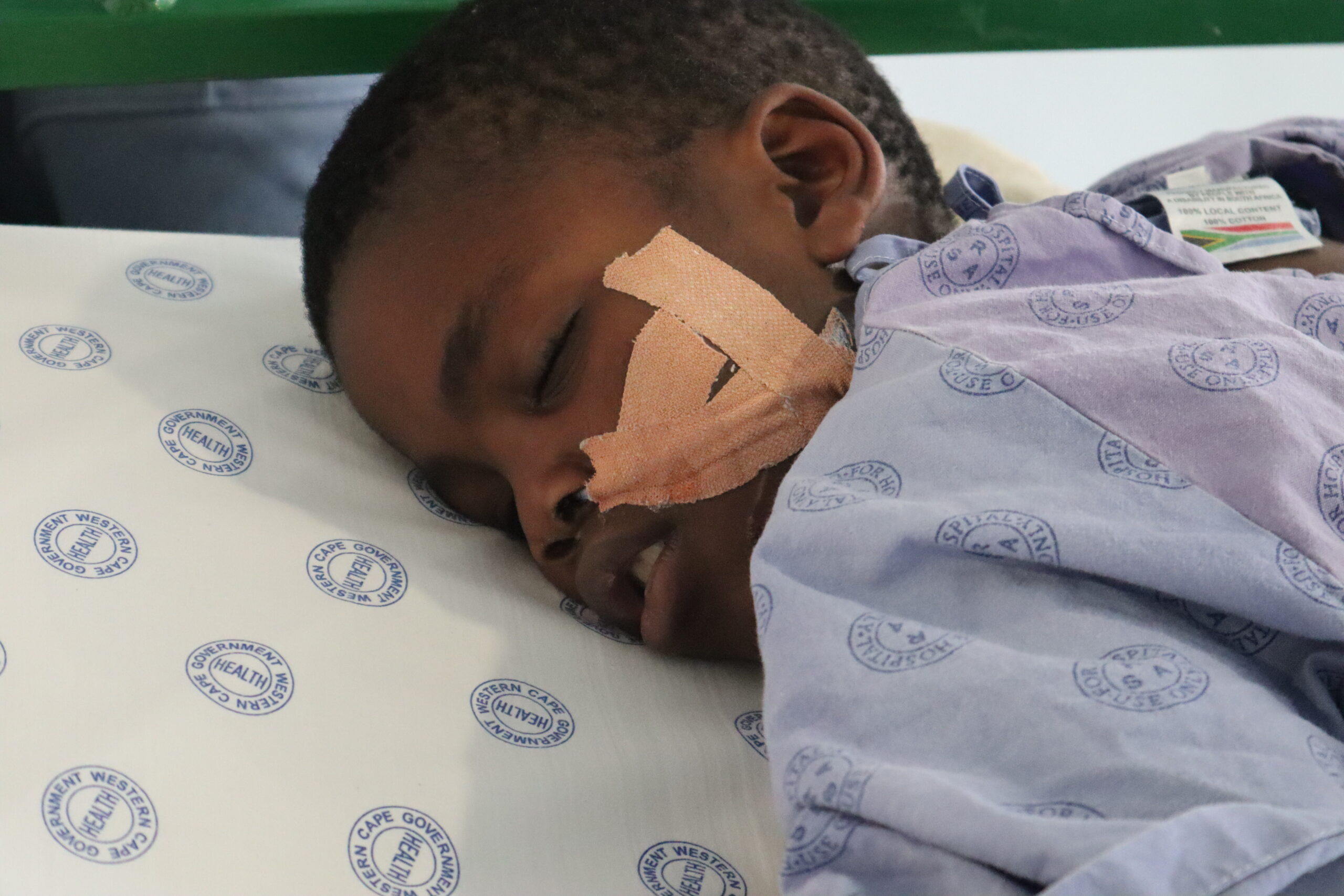
At last, the day arrived when Ricky would receive a gift that would change his life forever, his sister’s kidney.
Despite the many challenges the family had faced, the transplant was a success. Marilyn was overwhelmed with relief and gratitude. She is especially thankful to Professor McCulloch, who kept her informed throughout the operation, offering reassurance and ensuring that she knew how her son was doing every step of the way. For a mother who had once clung to the hope represented by just 2%, seeing her son receive a new chance at life is a gift she will never take for granted.
“My child is looking forward to playing soccer again and eating all his favourite foods,” Marilyn says, a broad smile lighting up her face. “Everything is so much better now.” Her experience has also left her with an important message for other parents.
“I want to encourage parents to take notice when their child complains of pain,” she says. “Investigate and find out whether something is wrong. I do not want other parents to go through what I did. Do not wait too long before taking your child to the clinic. Pay attention to your child and act quickly to help prevent complications.”
Ricky’s story is one of hope, faith and extraordinary love. Through his sister’s selfless gift, and the skill and dedication of the medical professionals at Red Cross War Memorial Children’s Hospital, he has been given a second chance at life and a new road towards the future he once seemed destined to lose.