
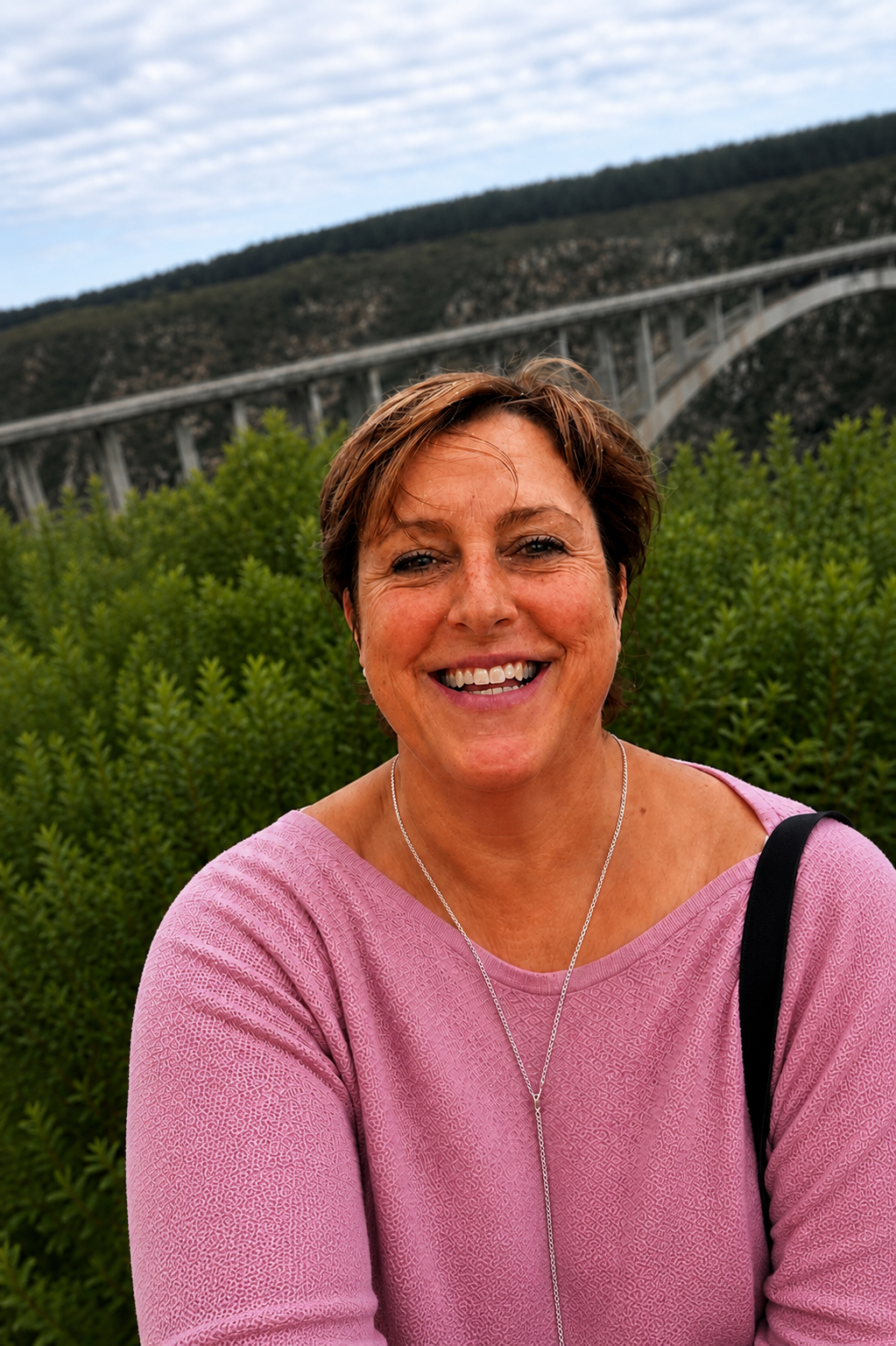
She still has the little suitcase. It is barely bigger than a handbag, and inside it are the same tiny Beatrix Potter books that were in it when she was four years old, and some small wooden bunnies her mother tucked in beside them. It came with her on the Blue Train to Cape Town. Fifty years later, at the age of 54, it when went with her for open-heart surgery a second time.
Before 1972, Madeleine’s world was small. She was always tired and remembers how the hot weather left her breathless and she would sweat through her clothes from almost nothing. Madeleine recalls, “I didn’t feel different as a child, mostly tired, but I knew they treated me different. Much “softer” than my brother.”
A Johannesburg physician named Dr Ron Tucker confirmed what her mother had known since she was eighteen months old: two holes in her heart, one in the upper chamber and one in the lower. Her heart had been working against itself from her first breath.
When the doctors finally said she was ready, her father booked them on the Blue Train from Johannesburg to Cape Town. She’s not sure why but believes her dad knew how fragile she was and probably wasn’t sure if she would survive a trip any other way. So, he booked them best seats.
On 21 March 1972, Madeleine was admitted to the Red Cross War Memorial Children’s Hospital in Cape Town. She was four years old. Her surgeon was Dr Christiaan Barnard. Barnard had been performing open-heart surgery on children at this hospital since 8 September 1958, the date he carried out the first open-heart surgery on a child in South Africa. By the time Madeleine arrived, fourteen years on, it was established work. The cardiac team was operating on an average of 180 children a year.
Of her weeks at the hospital, she remembers only two things clearly. The heartache of her mother leaving every night, because mothers were not allowed to stay. And the Oros they gave her each evening. She cannot touch the stuff today. The smell of hospitals still undoes her. Years later, when her father was seriously ill, she would walk into the ward and the panic attacks would come regardless.
What happened in theatre she learned afterwards, through her mother. Dr Venter, her mother’s cousin’s husband and an anaesthetist, had been given rare permission to stay for the full eight hours. He sent handwritten notes out to her parents throughout the surgery. Things are progressing. Looking good. What the notes did not say was that Dr Chris Barnard had opened her chest, looked at what he found, and told the team to close her up. He said there was nothing he could do. Venter spoke to him quietly. “I know her parents. They are sitting outside. Please, have one more look.” Barnard went back in, and the rest, as they say, is history.
Two days later, she came to the ICU and found her daughter standing at the lifts. The first memories Madeleine had after the op were: “Now I can play rough with my brother.”
She could. She ran, became a tomboy, and got into everything she had watched her brother do from a distance. She went to university with her two best friends and partied like a rockstar, she will tell you cheerfully, very well indeed. Probably should have studied harder. No regrets.
Her mother’s life changed too. After four years spent entirely at Madeleine’s side, the surgery gave her back her own. She went on to qualify as a tourist guide, trained guides across the country, built a career out of the years that had once been consumed by worry of losing her child. Madeleine followed suit in her mother’s footsteps, is a mother of two and today runs a travel company with her husband Rob, showing the world South Africa since 1999. Rob is her stalwart, she says. Super loyal. Never wavering. Without him, she would not have faced the second surgery with the confidence she did.
70 years of caring for children. Built by community. Powered by purpose.
