Cadi stared at the wall in disbelief. Every few months, her grandfather measured her and her sister to see how they had grown. When he was satisfied that the measurements were perfect, he would draw a line on the wall above each girl’s head and write the date beside each mark. For several months, her little sister’s marks were higher each time, but Cadi’s did not budge. Then one day, her little sister’s new mark was just below her own. Cadi was upset. She was supposed to be the big sister, and now her sister was almost the same height. Her grandmother had been watching the wall carefully for some time. She had an uncomfortable feeling, and she urged Cadi’s parents to take her to the paediatrician. They had tried to reassure her and themselves. After all, they insisted, each child grows at their own pace. But this time, no one could deny that something was wrong.
Her paediatrician was also concerned, and referred Cadi to an endocrinologist, a word so big that most children her age couldn’t pronounce it. After many tests, she was diagnosed with a craniopharyngioma, a tumour on the pituitary gland. Her doctor explained that the tumour was preventing her from growing normally and would need to be removed. Her parents were devastated.
They could not believe that their little girl needed brain surgery. Six months later, though, she had another CT scan, which changed everything. Cadi did not have a tumour after all. She had a cyst deep in her brain that was pressing on her pituitary gland. She would
still need surgery, but the cyst was far less dangerous than her first diagnosis.
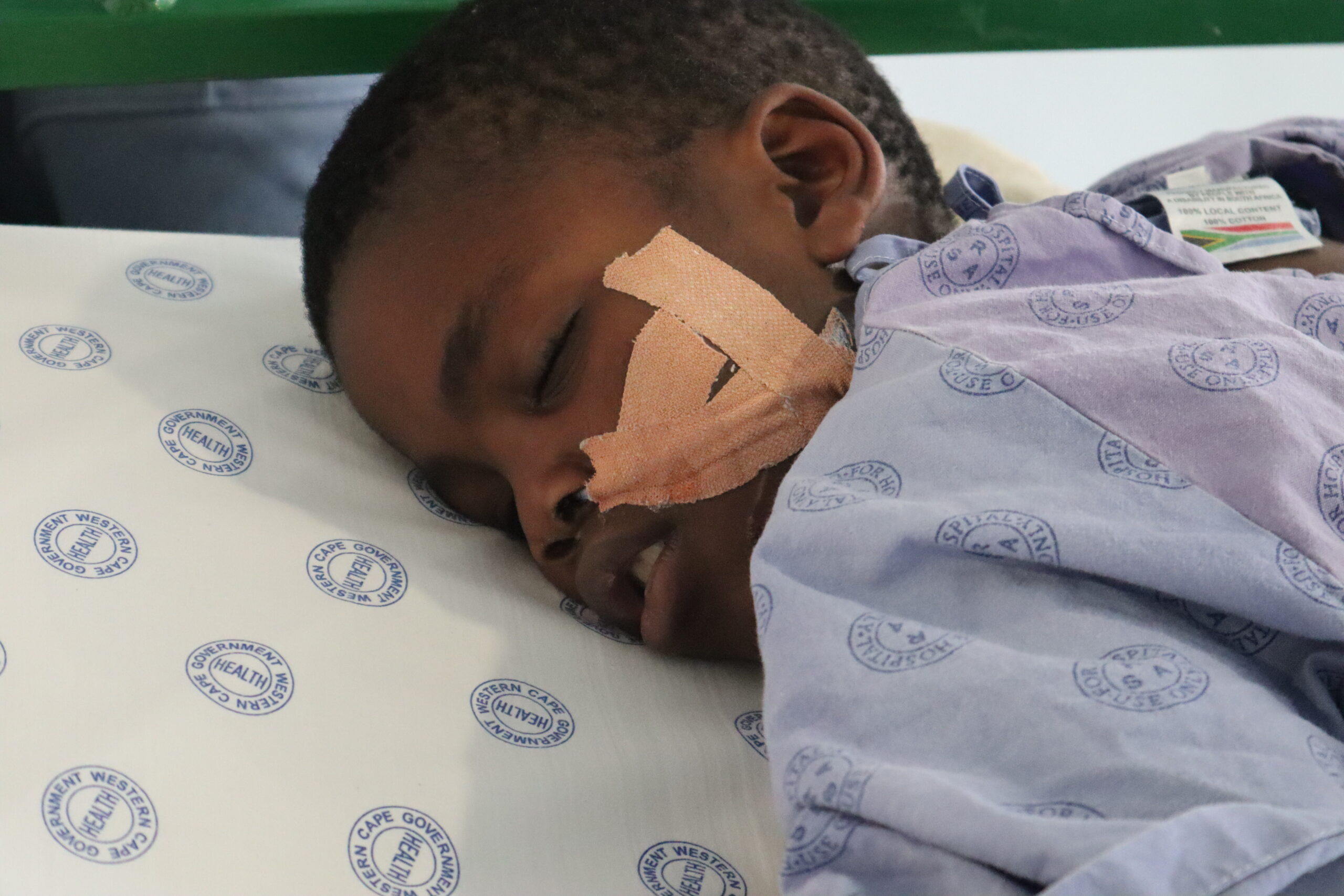
When she was seven, Cadi met her first superhero: her neurosurgeon. She was admitted to the Red Cross War Memorial Children’s Hospital and prepared for endoscopic surgery to remove the cyst nestled deep in her brain. When her surgeon explained the procedure to her, Cadi was amazed. She could not believe that someone could operate deep in her brain through a tiny hole, using instruments guided by a camera. In that moment, she knew what she wanted to do when she grew up. Then the day of her surgery came, and, as Cadi was being wheeled into the theatre, she looked back at her dad, tears welling up in her eyes, and whispered, “Dad, I don’t want to die.” The nurse who was wheeling her through the door stopped immediately. She took Cadi’s hand in hers, squeezed it gently, and assured her that she would be praying for her.
That nurse was one of many who would ease Cadi’s road to recovery. “They were there to wipe my tears, give me a hug, or cheer me up. Some felt like my grandma,” she recalls. Day by day, as she recovered, Cadi was more convinced than ever that she wanted to become a paediatric neurosurgeon. She knew firsthand what it felt like to be a frightened little patient, and she wanted to tell her patients that their doctor had had surgery on her brain.
As she grew, Cadi remained dedicated to the Hospital that had changed her life. She raised funds for the intensive care unit and helped provide desperately needed supplies. She was determined to ensure that the Hospital’s legacy of care would continue for future generations of children. And now, in 2026, as the Hospital celebrates its 70th year, Cadi is a first-year medical student. She has just begun the long road toward becoming a paediatric neurosurgeon herself. Her story has become part of the Hospital’s legacy, a reminder that the Hospital and its heroes do far more than treat little bodies.
They give children hope and the power to dream of futures that once seemed impossible.